Download links for FS9, FSX&P3Dv3 und P3Dv4 you find at the bottom of this page ...
Gliders 1923 - 1942
Schulgleiter 'Hol's der Teufel'


The "Hol's der Teufel" of 1923 was likely the forefather of the SG 38 training glider. It was designed
by Alexander Lippisch in 1923 and featured a mast and a fuselage strut in front of the pilot. It is
therefore arguably the first "skull-splitter." Hans Jacobs improved this gliderand created a variant
of the "Hol's der Teufel" with wing struts and without a fuselage strut in front of the pilot.
This variant was built by Alexander Schleicher as early as 1927 as the first series product.
Nevertheless, surprisingly, the flight performance of the "Devil" is considerably better than that of
the SG 38, which was built in large numbers 10 years later but was probably cheaper and more popular.
Source: www.Schulgleiter.de (Translated by Google)
Glide ratio 1:15 at 58 km/h
Schulgleiter SG-38
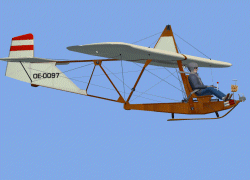
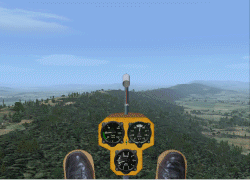
The SG-38 Schulgleiter was developed from the 'Hols der Teufel' by Lippisch,
Zoegling by Stamer, as well as from the Grunau-9. The Designers of this glider were
Rehberg, Schneider and Hofmann. Altogether over 5000 pieces were built in the years
1938 to 1943.
This FS model has a panel as it is used for today's after-buildings.
The FS model contains 2 color versions, Austria and Spain.
The fuselage of this FS model was corrected in January 2009 according to original plans.
Glide ratio 1:10 at 52 km/h
Grunau Baby IIb
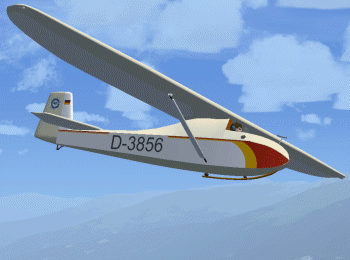
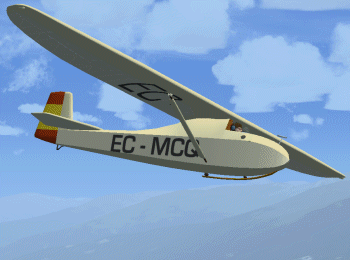
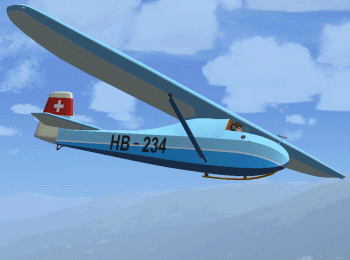
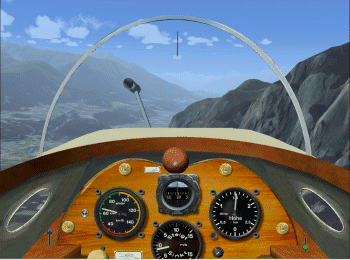
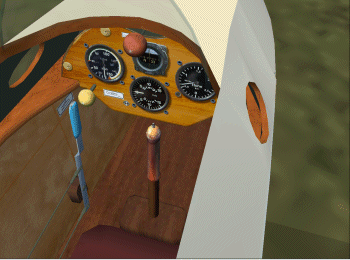 The Grunau Baby II b began its triumphant advance 1933 with a continuous
world record of almost 22 hours and was in the following 2 years the
most flown glider of the world. Altogether about 5000 pieces were built.
The Grunau Baby II b began its triumphant advance 1933 with a continuous
world record of almost 22 hours and was in the following 2 years the
most flown glider of the world. Altogether about 5000 pieces were built.
his model contains 3 color versions: Germany, Spain and Switzerland.
Thanks to Mathias Wagner for his repaint work on the HB-234.
Glide ratio 1:17 at 60 km/h
Schempp-Hirth Gö-3 'Minimoa'
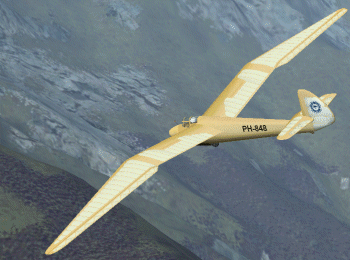
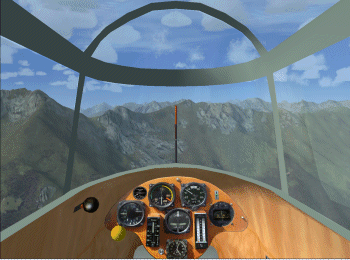 The Schempp Hirth Goe-3 ' Minimoa ' was
the first high performance glider of the world, which was manufactured in the series
production. Between 1935 and 1939 110 pieces were built.
Panel and plane were made by documents of the Dutch glider PH-848.
The Schempp Hirth Goe-3 ' Minimoa ' was
the first high performance glider of the world, which was manufactured in the series
production. Between 1935 and 1939 110 pieces were built.
Panel and plane were made by documents of the Dutch glider PH-848.
Glide ratio 1:26 at 70 km/h
Gö-4 III 'Goevier'
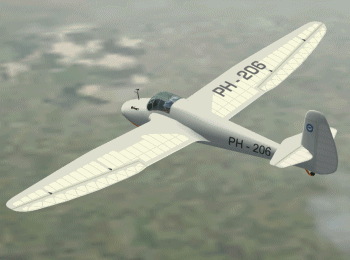
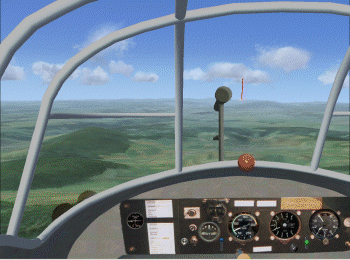
The Schempp-Hirth Goe-4 - III 'Goevier ', a two-seater 'side-by-side'.
From 1938 to 1943 more than 100 planes were built (Goe-4 II). 1951 the production of
this glider resumed with a shorter fuselage and changed rudder assembly
(Goe-4 III). 20 pieces were built, 6 were delivered to Holland.
Thanks to Jan Roza for his picture documents !
Glide ratio 1:20 at 70 km/h
DFS Kranich II
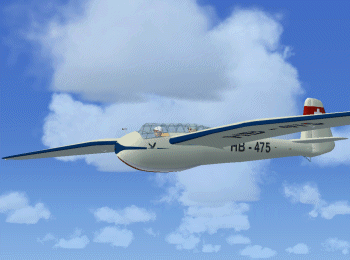
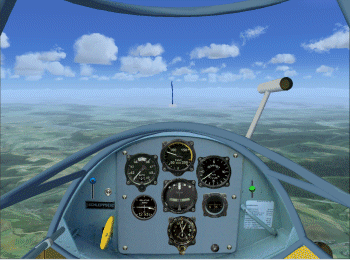
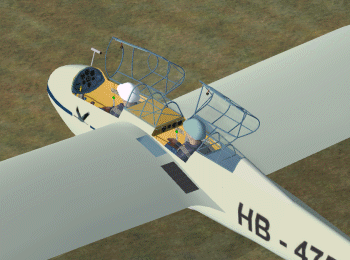
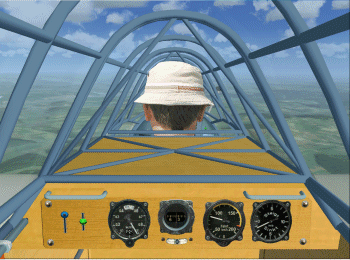
The Kranich II was the most built glider in Germany for training and performance
within the years 1935 - 1939. As many were produced isn't exactly known.
The instructor or guest had to climb over the wings into his seat, his view conditions
were bad. Therefore windows were installed into the wings.
The canopy was three-part. The back part could be left out for parachute jumpers.
Today only some few of these beautiful old gliders are existing.
The FS model contains 2 color versions, Switzerland and Spain.
Thanks to my friend Carlos Pereira Ciezar for his pictures and documents from
the Air Force Museum (Museo del Aire) in Madrid !
Glide ratio 1:23.6 at 75 km/h
Mü-13 D 'Atalante'
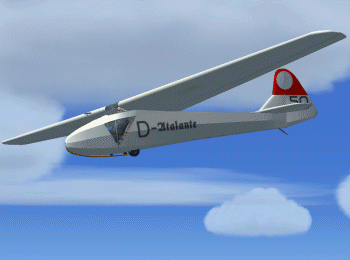
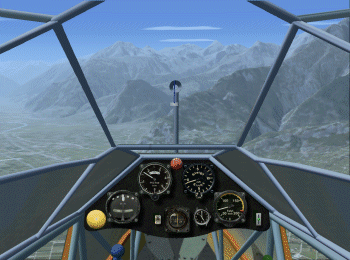
The prototype of the Mü series, the Mü 13 D 'Atalante' was built 1935-1936 by Kurt Schmidt with help from Egon Scheibe.
He won many competitions with this airplane later. The 'Atalante' had flaps, so he reached minimal speeds less
than 50 km/h. To improve the view conditions, at the side of the fuselage additional windows were provided.
At that time, the tubular steel trunk was still a novelty for gliders.
Glide ratio 1:28 at 67 km/h
Mü-13 D II
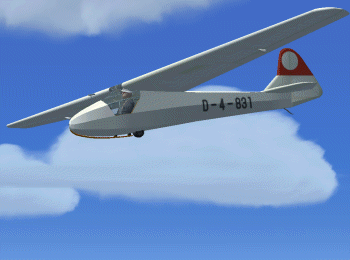
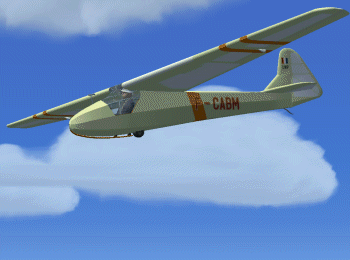
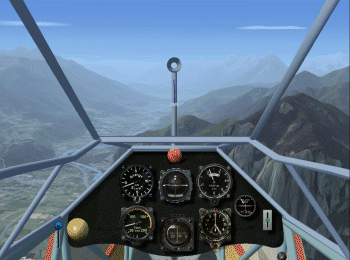
The Mü 13 DII was the follower of the Mü 13 D 'Atalante'. It was built within the years 1939 - 1943
at Schwarzwald-Flugzeugbau Donaueschingen in several variants (D I - D III), about 150 airplanes were
produced and some of them are still flying today.
This FS model is available in German and French colors.
Glide ratio 1:28 at 67 km/h
Mü-13 D III
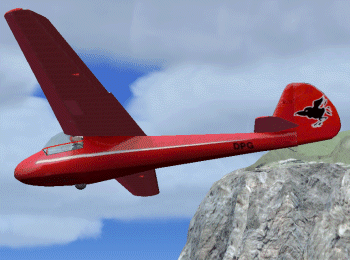
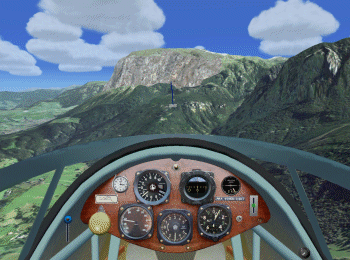
The Mü-13 D III had it's first flight in 1942. The glider got a longer trunk as well as a
greater rudder.
Later, in 1950 some pieces were built again at Schwarzwald-Flugzeugbau in Donaueschingen.
The FS model has English instruments because the owner is from England.
The picture documents for glider and panel are from Thomas Häcker.
Glide ratio 1:28 at 67 km/h
DFS Weihe
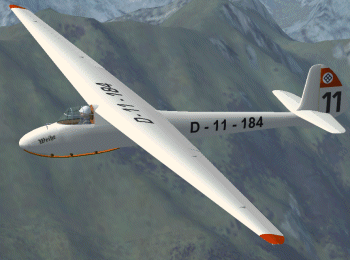
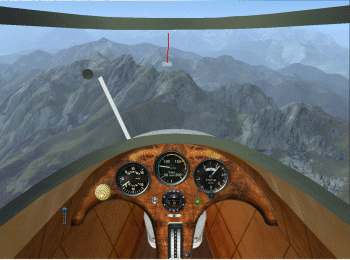
TheWeihe arose after the development of the gliders Rhoenadler and Reiher of Hans Jacobs.
About 300 pieces were built at this time. The production was WW II interrupted and
continued in 1950 of Focke-Wulf with the Weihe-50.
The FS model contains 2 color versions, Germany and Spain.
Glide ratio 1:30 at 70 km/h
DFS Habicht 13,6m
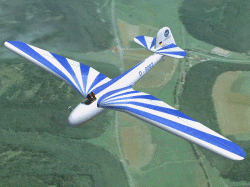
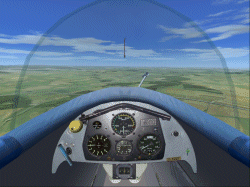
The Hawk was the first full-aerobatics-suited glider of the world. It was designed in 1936. Extensive strength
calculations and brake tests were made after this.
Today, an after-built hawk flies again on the Wasserkuppe/Rhoen. From this glider - D-8002 - Thomas Brückelt made
many detailed pictures. Many Thanks, Thomas !
Glide ratio 1:21 at 75 km/h
DFS Habicht 13,6m
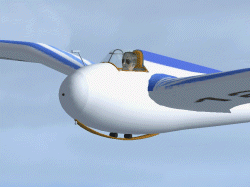
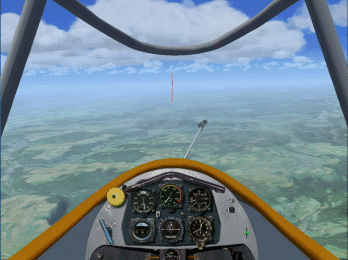
The Habicht with closed canopy, old paintures and old instruments.
DFS Habicht 8m
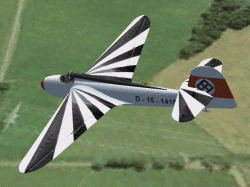
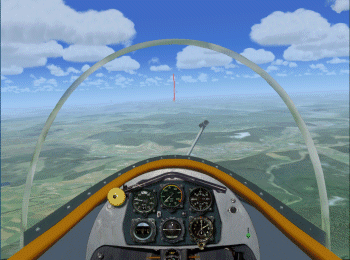
The Hawk with 8 m of span width. Pilots were prepared on it for flying on fast airplanes.
The panel is equipped with the older instruments.
Glide ratio 1:14 at 120 km/h (estimated)
DFS Habicht 6m 'Stummelhabicht'
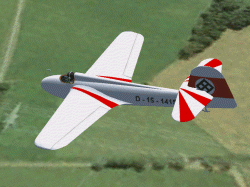
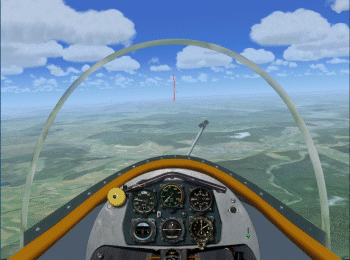
The Hawk with 6 m of span width. Pilots were prepared on it for flying on fast airplanes.
The panel is equipped with the older instruments.
Glide ratio 1:11 at 130 km/h (estimated)